Thursday, December 3, 2020

The Physics of Scoring a Soccer Goal Off Of a Corner Kick

 Jenna Borovinsky


The Physics of Scoring a Soccer Goal Off Of a Corner Kick

Scoring a goal off of a corner kick is incredibly rare. It is known as the “Olympic goal.” Out of my 15 years of playing soccer I have witnessed maybe one goal being scored off of a corner kick. Even trying to practice scoring a goal off of a corner kick is incredibly difficult without both a goalie and field players present, as a goalie and field players are extra barriers preventing this goal from occurring. In order to score this goal you have to “bend,” or curve the ball into the goal, which you can’t even see when kicking the ball at the corner kick position.


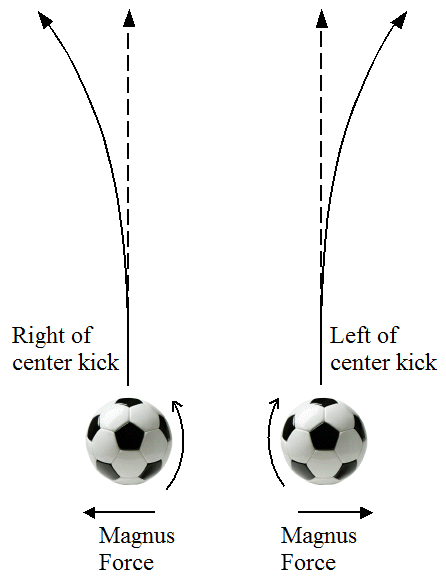
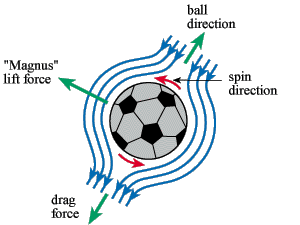
 The first thing one has to take in account when shooting this corner kick is the wind, or force of air resistance. Thus, when kicking the ball one has to do so a few yards away from the goal into the 18-yard box as the force of air resistance will push it towards the goal. One also needs to have swerve on the ball. Bernoulli's principle is the principle that states as air velocity increases, air pressure decreases. Thus, there is reduced pressure on the side of the ball that air velocity is moving towards; this causes the ball to curve towards that direction. Furthermore, the swerve which generates the ball bending is known as the Magnus effect. This is why there is controversy when it comes to the creation of soccer balls with less panels. A soccer ball with more panels, or the stereotypical soccer ball, theoretically is more suited for the Magnus effect because it has more roughness. The applied force from kicking the soccer ball causes it to accelerate at a fast speed, air resistance causes the ball to slow down, and the force of gravity causes the ball to fall down. It is the Magnus effect that causes the ball to not move in a straight path, but rather curve into the goal. Thus, when one kicks the ball in the wrong position it will either not curve inwards enough and move in too much of a straight direction, or curve too much and miss the goal completely. The direction of the foot and location in which one kicks the ball is incredibly important in optimizing the Magnus effect. Essentially, if you want to curve the ball to the left you should kick the ball from the right side of the ball. And, if you want to curve the ball to the right you should kick the ball from the left side of the ball.  This is because the Magnus force moves in the direction you kick the ball towards, and lifts the ball upwards from staying on the ground. Drag force moves in the opposite direction of the ball direction. And the spin direction is perpendicular to the ball direction. Further, the needs to have a great enough applied force to reach the goal dimensions of the width being 7.32 meters (8 yd) apart, and the height of the goal being 2.44 meters (8 ft). Kinetic energy also plays a role the velocity and mass of one’s leg plays a role in the ball kicked. Thus, there are a lot of factors that need to go right in order to even have a shot on goal from the corner kick spot which is around 37.5 m away from the center of the goal. 


The Magnus Effect
http://ffden-2.phys.uaf.edu/webproj/211_fall_2016/Juan_Acevedo/Juan_Acevedo/Magnus%20Effect.html


https://www.sportbible.com/football/news-take-a-bow-gaming-its-really-easy-to-score-directly-from-a-corner-on-fifa-20-20191009


https://www.wired.com/story/the-physics-of-the-one-goal-you-wont-see-at-the-world-cup/

http://ffden-2.phys.uaf.edu/211_fall2013.web.dir/josh_kunz/Physics.html

https://www.youtube.com/watch?v=n0TDcTFK8JI


Dr. Jena Meinecke

Dr. Jena Meinecke is an astrophysicist who studies the evolution and origins of magnetic fields. Working with the largest laser in the world, which is housed at the National Ignition Facility (NIF) in California, Dr. Meinecke also works with a research team at Oxford to better understand the origins of galactic and intergalactic magnetic fields. 

Meinecke describes magnetic fields as the “invisible glue that holds objects in the universe together.” Using the NIF laser, Meinecke and her team re-create “powerful astrophysical events such as supernovas” to study and recreate the forces and behaviors needed in the universe to create magnetic fields, which usually develop over hundreds of years. Her team cuts this time into fractions of seconds.

Dr. Meinecke is featured in many publications and several informative documentaries related to the work of her and her team, one of which is available here: https://www.imdb.com/title/tt4994784/. In 2014, Dr. Meinecke’s work was published in Nature Physics and named one of the Top 10 Breakthroughs by Physics World. 

Currently on sabbatical here in the US, Dr. Meinecke is active on Twitter, Instagram, and Reddit. She is an outspoken supporter and advocate for women in Physics, and works to combat the “Imposter Syndrome” effects felt by many women in male-dominated fields. Graduating from community college, and only stumbling into physics after accidentally signing up for a physics course while an undergraduate, Dr. Meinecke’s story and current work is a testament to the power of determination and hard work.

Learn more about Dr. Meinecke here:

https://nationalspaceacademy.org/previous-keynote-speakers/428-dr-jena-meinecke

https://jenameinecke.com/


Laminar Flow, Turbulent Flow, and the Circulatory System

Laminar Flow, Turbulent Flow, and the Circulatory System

Now that I am back home and have more free time, I have started to prepare for the MCAT. One of the sections I was reviewing recently was the circulatory system, where I recognized the importance of laminar and turbulent flow within this system. 

The circulation of blood cells within the body more or less follows a laminar flow. The blood cells in the middle of a vessel move the fastest, while blood cells near the periphery of the vessel move more slowly due to friction between blood cells, plasma, and other blood components and endothelial cells. The “middle blood” moves faster or slower depending upon the size of the vein or capillary, but we will simplify here and assume that all blood follows the same laminar flow. 

Although some blood cells may be travelling faster than others, we can see in the diagram above that the blood cells all travel in the same uniform direction. Issues arise in the circulatory system when turbulent flow is introduced. Some turbulent flow occurs naturally in the body, such as in the atria of the heart. In addition, the aorta has been observed to dilate slowly with age; this dilation can have no effect or it can help contribute to the symptoms of cardiovascular disease. Turbulent flow presents a larger problem, however, in the instance of plaque build-ups around the body. When plaque begins to build up in an artery, the velocity of blood cells passing through the now smaller artery opening increases. The equation for laminar flow is given below: 

p1A1v1 = p2A2v2

The issue with plaque build-up is not the increase in speed of the blood cells, but with the turbulent flow that creates “eddies” in the blood after passing the plaque build up. These blood eddies caused by turbulent flow can cause blood stagnation, inflammation, or infection. In addition, these turbulent-flow blood eddies have been implicated in conditions such as heart attacks, aneurysms, and thromboses. The image on the bottom to the left depicts turbulent flow and blood eddies (in comparison to the healthy laminar flow above), and the bottom right image is a simulation of how turbulent flow contributes to a hypothetical thrombosis. 

Literature Cited:

https://www.frontiersin.org/articles/10.3389/fphys.2018.00036/full


http://mriquestions.com/laminar-v-turbulent.html


https://basicmedicalkey.com/alterations-in-blood-flow/


https://www.youtube.com/watch?v=nF6nJE-FkWM


Wednesday, December 2, 2020

Edward Graves


   Edward Graves, PhD, is a medical physicist at Stanford University's medical school. He received both his Bachelor's in 1996 and his PhD in 2001 in bioengineering from UC Berkley. According to his CV, Dr. Graves has held various research positions at UCSF and in the department of radiology at Massachusetts General Hospital. He currently teaches courses in topics like radiation oncology and radiation physics at Stanford University School of Medicine. He also has an impressive list of publications including 78 peer reviewed journal articles and 5 book chapters. In addition to these publications, Dr. Graves is a member of various societies dedicated to medical physics such as the Academy of Molecular Imaging, American Society of Therapeutic Radiology and Oncology, and the American Association of Physicists in Medicine. 

    Research in the Graves lab focuses on imaging such as PET/CT scans of cancer patients' tumors, how to better image tumors to provide more targeted radiation therapy, and how to use imaging to study tumor hypoxia. His lab's website states, "We are a multi-disciplinary group with expertise and engineering, biology, chemistry, medicine, and computer science." Therefore, his lab is carrying out important work that uses integrative techniques to develop a more holistic view of their research topics to provide the most effective results. One of his lab's studies titled, "The role of granulocyte macrophage colony stimulating factor (GM-CSF) in radiation-induced tumor cell migration" was published in 2018. They observed that the cytokine GM-CSF was expressed by tumor cells and plays a role in cancer regrowth after radiation therapy. However, they found that adding a polyethylene glycol chain to the cytokine did not increase aggressiveness after radiation. The Graves lab attempts to better understand the ways in which imaging and radiation can be used to design better treatments for cancer patients through integration of various biological, physical, and chemical techniques. 


References:

Vilalta, M., Brune, J., Rafat, M., Soto, L., & Graves, E. E. (2018). The role of granulocyte macrophage 

    colony stimulating factor (GM-CSF) in radiation-induced tumor cell migration. Clinical & 

    Experimental Metastasis35(4), 247–254. https://doi.org/10.1007/s10585-018-9877-y

https://profiles.stanford.edu/edward-graves?tab=bio

http://www.med.stanford.edu/graveslab.html

Rock Mackie

 Rock Mackie

UW-Madison's 'Rock' Mackie rocks business plan contest | Business News |  madison.com

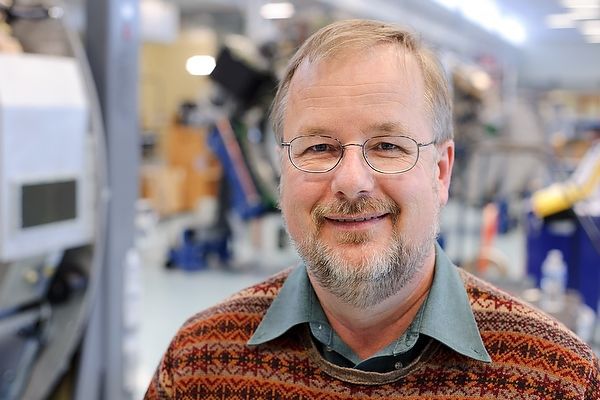
Rock Mackie, PhD, is an emeritus professor in the department of medical physics and human oncology and the Vice Chair for the Board of Visitors at the University of Wisconsin School of Medicine and Public Health. He was born and raised in Saskatoon, Saskatchewan in Canada and received his B.S. in physics from the University of Saskatchewan before receiving his PhD in physics from the University of Alberta. 

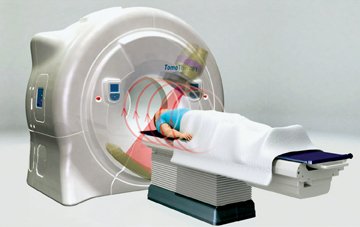
Over the course of his career, Mackie has published over 165 papers within the past 36 years. Mackie’s career focus has been on making radiation therapy and imaging more efficient for cancer patients. In addition to his academic contributions to medical physics, his career has also been marked by his entrepreneurship. He founded TomoTherapy, Inc., which helped to develop tomotherapy. Tomotherapy is akin to a combination of a CT scanner and a linac, and has become the most widely used cancer therapy treatment globally. He has also co-founded other medical technology companies such as Geometrics, and helps invest in and conduct research for Shine Medical Technologies as well as Wisconsin Brewing. His current research has been focusing on developing a proton therapy machine for cancer treatment. 


Two of a Kind: VMAT Versus Tomotherapy | Imaging Technology News

Tomotherapy uses technology used in both CT scans and linac (linear acceleration) to efficiently deliver radiation therapy to cancer patients. During tomotherapy, the patient lays down in a machine that looks quite similar to a CT machine. The “CT component” of tomotherapy allows physicians to monitor the patient’s anatomy during and between appointments, and adjust the radiation beam accordingly. In other words, CT technology allows physicians to monitor a tumor’s growth between appointments, and then adjust the radiation beam to precisely target a tumor that may have moved because of weight loss or shrinkage, for example. This allows physicians to hone in on cancerous tissue while sparing healthy tissue more efficiently. The linac portion of tomotherapy allows physicians a greater amount of “movement” around the patient. Physicians can either deliver multiple radiation beams while the patient moves through the machine in “fixed” tomotherapy, or a beam can “trace” a patient as the patient is held stationary. Tomotherapy has helped make radiation treatment much less invasive, and has made it much more precise. 


Literature Cited:

Hellpap, Andrew. "'Rock' Mackie Brings Expansive Entrepreneurial Talent to Lead New InnovationInitiative." UW Health, www.uwhealth.org/news/thomas-rock-mackie-to-lead-innovation-initiative/52527.


"T. Rockwell Mackie." Department of Medical Physics University of Wisconsin School of Medicine and Public Health, www.medphysics.wisc.edu/blog/staff/mackie-t-rockwell/.


Newman, Judy. "UW-Madison's 'Rock' Mackie rocks business plan contest." Wisconsin State Journal, madison.com/wsj/business/uw-madisons-rock-mackie-rocks-business-plan-contest/article_b593833f-7bd0-5b8e-9524-8196b40a664b.html. 

PubMed. pubmed.ncbi.nlm.nih.gov/?term=Mackie%20TR[Author.


Charles Meneveau


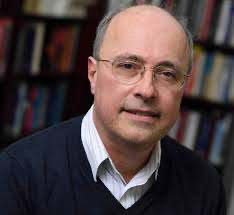
Charles Meneveau born in 1960 is a French-Chilean born American fluid dynamisit. He is known for his work on turbulence, specifically turbulence modeling and computational fluid dynamics. Currently, Meneveau is the Louis M. Sardella Professor in Mechanical Engineering and the associate director of the Institute for Data Intensive Engineering and Science (IDIES) at  Johns Hopkins University. Meneveau earned his PhD in Mechanical Engineering in 1989 at Yale Univeristy and his first postdoctoral position was at the Stanford University/NASA-Ames's Center. He has worked at John Hopkins University since 1990 in the Department of Mechanical Engineering with secondary appointments in  the Departments of Environmental Health and Engineering and Physics and Astronomy. Over the years he has accumulated a lot of awards and recognition including the Henry P. Becton Prize for Excellence in Research from Yale University in 1989 and in 2013 becoming a Fulbright Scholar. 

Currently, with Jonathan Naughton at Johns Hopkins University, Meneveau has been researching the promise and fluid dynamics challenges of wind energy. With the race to develop clean and reneweable energy, wind turbines have emerged to be a real contender and topic of research. The end goal of this research is to understand how wind interacts with turbines on large scales, because according the fellow researcher Naughton, “Wind is really an atmospheric fluid mechanics problem.” With an understanding of the physical challenges of wind turbines, researchers hope to aid in the development of inexpensive and efficient wind turbines. Specifically, Meneveau and other researchers are focusing on large scale wind turbines which have yet to be explored due to the lack of investment in wind energy. This includes studying how the blades of wind turbines, ranging from 50 to 70 meters, interact with the wind. The challenges of this research is the use of atmospheric modeling and the collection of data on groups of wind turbines to see how they interact with one another. 


References:

https://phys.org/news/2020-11-supersized-turbines-energyand-physics.html

https://en.wikipedia.org/wiki/Charles_Meneveau

https://pages.jh.edu/~cmeneve1/


Tuesday, December 1, 2020

Physics of a Hockey Slapshot

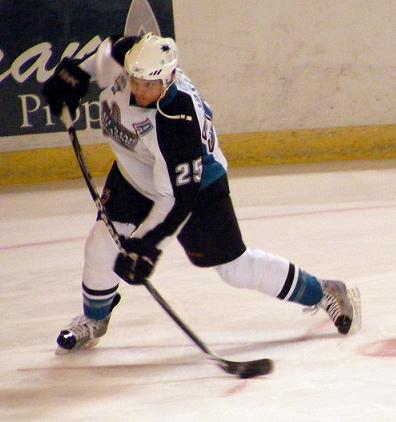
 I used to play hockey goalie and would have to deal with the 80+ mph slap shots coming from only 15 feet away. I never understood the physics behind this high intensity tactic used by players to produce extremely fast paced shots. Now I understand that this technique uses an elastic collision in which the stick hits the ice before the puck to create stored spring energy that is transferred to the puck as kinetic energy. This produces the high velocity of the puck. 

Hockey players needed new ways to get the puck passed the goaltender, and what better way to do that than with the fastest way to shoot a puck. A slap shot allows a player to get the maximum amount of power and energy into the puck to produce its maximum velocity. The player will raise up his stick, swing it down to make contact with the ice, create a bend in their stick, and make contact with the puck to transfer energy through the system and increase its velocity. 


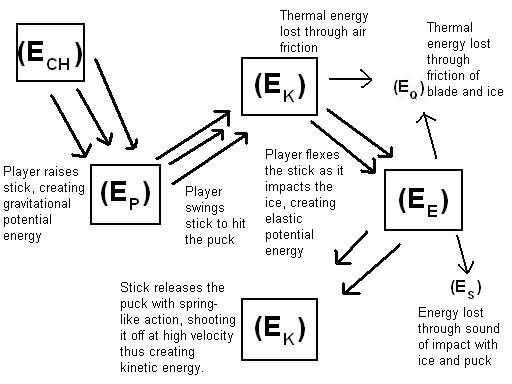
The picture above of the hockey player shows the obvious bend in the stick as it makes contact with the puck on the ice surface. The physics behind why this shot produces high puck speeds is actually very cool. When the player raises their stick in the air, they are creating gravitational potential energy that is stored in the stick. As it is swung down using kinetic energy, it hits the ice before hitting the puck and is creating a bend in the stick which puts spring, or elastic, potential energy into the stick. Upon decompression of the stick as it makes contact with the puck, the energy is transferred to the puck as kinetic energy. Because energy is conserved in this action, the sum of the energies can be equalled to zero and one can analyze the speed produced from the system. The energy put into the stick to create the bending comes from the weight of the player and the bend can be controlled by how much is put in. If a player puts a lot of his/her weight into the stick, it creates a large bend and will produce a higher transfer of energy into the puck. A higher transfer of energy will give a faster velocity of the puck as the elastic collision has more energy stored. Zdeno Chara is the tallest player in the NHL, standing at 6’9” and weighing 260 lbs, and he can transfer a lot of power and weight into his stick. With this power, he is able to produce a shot at over 108 mph and still holds the record in the NHL to this day. The energies in the system, while some are lost due to sound and frictions, allow for the most amount of energy to be transferred from the player to the stick to the puck to cause a maximum velocity shot. 


Work Cited:

Cross, Rod, and Crawford Lindsey. “The Slap Shot in Ice Hockey.” American Association of Physics Teachers, American Association of Physics Teachers AAPT, 1 Jan. 1970.

“Shooting.” The Physics behind Hockey, physicsofhockeyproject.weebly.com/shooting.html.